
Today, smart machines are helping doctors more than ever. With the rise of AI diagnostics, many people ask: Can AI be better than human doctors? Can it really find health problems more quickly or more accurately?
Let’s look at what AI can do, what doctors still do best, and how they can work together.
What Are AI Diagnostics?
AI diagnostics use artificial intelligence to study medical data. This data can be X-rays, lab results, or even notes from a doctor.
The AI looks for patterns and signs of disease. Then, it gives a result or suggestion. For example, it might say, “This X-ray shows signs of pneumonia,” or “This blood test could mean diabetes.”
It’s fast, smart, and always improving.
What AI Does Well
AI diagnostics have many strengths. Let’s break them down.
1. Speed
AI can read test results and images in seconds. This helps doctors move faster, especially in emergencies.
2. Accuracy
AI finds tiny details in scans that people might miss. For example, in cancer screening, AI can spot very small tumors early.
3. Consistency
AI doesn’t get tired or distracted. It treats every image or test the same way, every time.
4. Learning Power
The more data it sees, the smarter it gets. AI diagnostics keep improving as they learn from more patient cases.
Because of these strengths, AI is a powerful tool in modern healthcare.
What Human Doctors Do Best
Even though AI is fast and smart, it can’t do everything. Here’s what human doctors still do better:
1. Understanding Emotions
Doctors don’t just read tests — they listen, comfort, and care. They understand how patients feel, which AI can’t do.
2. Asking the Right Questions
Doctors talk with patients to find out what’s really going on. They ask follow-up questions and think deeply about the answers.
3. Making Complex Decisions
Health is more than test results. Doctors consider many things — lifestyle, family history, even personal choices — when making decisions.
4. Spotting the Unusual
Sometimes, a case is rare or doesn’t follow normal patterns. Doctors can think outside the box. AI might get confused.
So, while AI is strong with data, human doctors are strong with people.
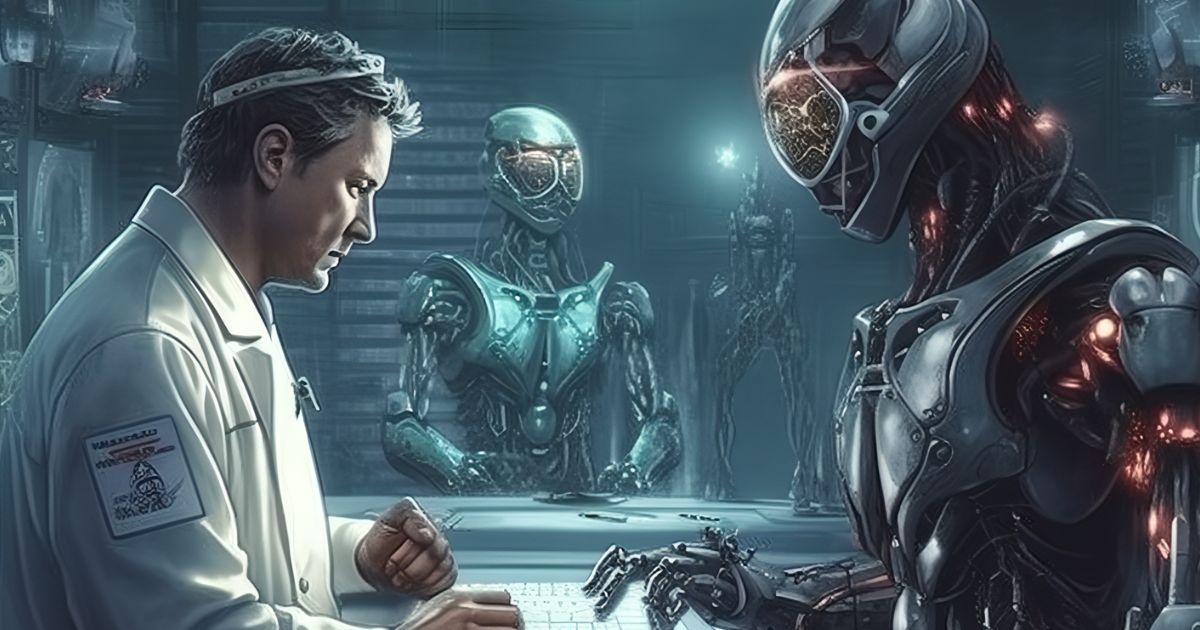
Can AI Diagnostics Replace Doctors?
No, not now — and maybe not ever.
AI diagnostics are tools. They help doctors, but they don’t replace them. A doctor might use AI to double-check a result. Or to spot something they might have missed. But the final choice should still be made by a human.
Think of it like flying a plane. AI is like autopilot — helpful, fast, and safe. But would you want a flight without a pilot on board? Probably not.
When AI and Humans Work Together
The best care happens when doctors and AI work as a team. Here’s how that works:
-
A patient gets a scan.
-
The AI checks it and gives a report.
-
The doctor reviews both the scan and the AI’s findings.
-
The doctor talks to the patient, asks questions, and makes a plan.
In this way, AI diagnostics help doctors be even better.
Real-Life Success Stories
-
In breast cancer screening, AI now helps doctors find early signs. It often spots tumors that are easy to miss.
-
In eye care, AI scans the retina and finds early damage from diabetes.
-
In emergency rooms, AI looks at chest X-rays and flags serious problems right away.
These tools don’t replace doctors — they help them act faster and smarter.
What Are the Risks?
There are still challenges with AI diagnostics:
-
If AI is trained on poor data, it may give poor results.
-
It may not work well for rare diseases.
-
Sometimes, it gives “false alarms” — calling something a problem when it’s not.
That’s why doctors always need to check the results. AI is powerful, but it’s not perfect.
Final Thoughts
So, can AI do it better than doctors? In some ways, yes. AI diagnostics are fast, smart, and helpful. But they don’t replace human care. They work best as tools — not as doctors.
When AI and humans work together, patients get the best of both. Smart machines plus human hearts make healthcare safer, faster, and more personal.
The future is not AI versus doctors. It’s AI with doctors — and that’s the best care of all.